
N.168


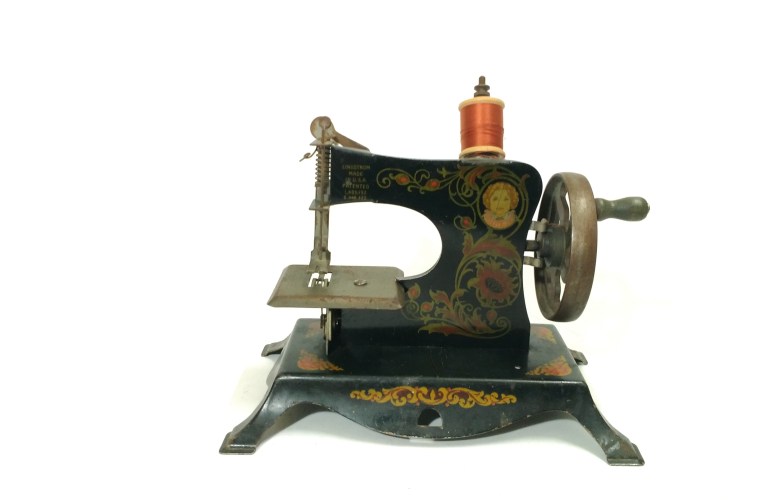
N.168

N.159


N.163


N.396


N.310


N.380


N.216


N.254


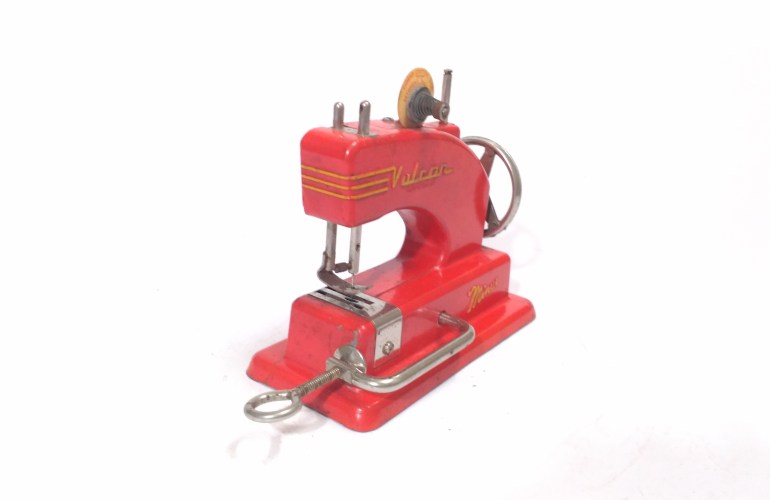
N.160


N.372


N.229


N. 308


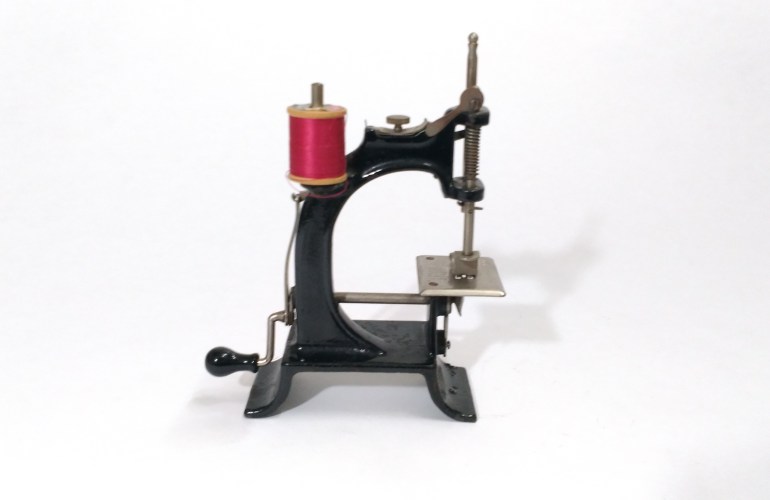
N.122


N.149


N. 243


N. 71


N.119


N.260


N.222


N.400


N.407


Artcraft Metal Products, Inc.
West Haven, Connecticut, USA
MODELS FROM NAVA COLLECTION
N.165


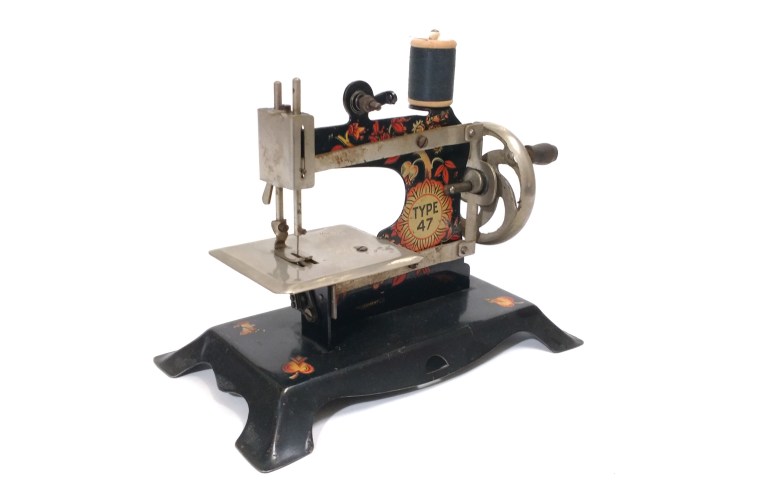
Schurhoff and Co.
Gevelsberg, Germany
This company produced machines between 1948 and 1960 .
MODELS FROM NAVA COLLECTION :
N.117


N.154


N.157


N.162


George Michael Pfaff
1823-1893
Pfaff sewing machines are brilliant and have been built on years of specialist skills. Although today Pfaff sewing machines are made all over the world the business started in Germany way back in 1862.
The original company was formed by Georg Michael Pfaff. G M Pfaff was a skilled engineer making and repairing all sorts of fine mechanical instruments before turning his skills to the manufacture of sewing machines.
The legend tells that he was an award winning instrument maker, starting his apprenticeship in Mannheim in 1835. By 1840 he had learnt enough to start making his own instruments but as a young man he had itchy feet and went walkabout around Europe. He seems to have paid for his travels partly with family money and partly using his skills along the way from Germany to Italy and everywhere in-between even stopping in London to win an award or two for his fine pieces.
However back home in Kaiserslautern in 1848 he opened his own workshops. It was while he was working on instruments that he bought a sewing machine to make leather cases for his instruments. After it failed he repaired it and then decided to build something bigger, stronger and better. Using his skills and copying many of the best selling machines of the period such as Howe and Singer, he built his own sewing machine.
There is no doubt that Georg was looking at the ever expanding explosion of sewing machines and thought he would have a bit of that pie. Using much of the Howe system, under licence from the American company, he started to construct his first sewing machine and the foundry around it for mass production.
By 1862 he had formed G M Pfaff and in 1863, with a great publicity fanfare, he sold his first sewing machine to a local boot maker, Jacob Peter. Sewing machine manufacturing had arrived in Kaiserslautern.
Guaranteed for life!

Pfaff, Kaiserslautern, Germany.

Pfaff toy sewing machine modelled on the Singer 20 toy sewing machine.
Over the next few years he slowly expanded his factory and by 1867, with over 20 employees, he could hand build over 100 sewing machines every year at his Mozart Street foundry. The rest as they say is history. By 1875 they were manufacturing over 1,200 machines a year and by 1882 they had built over 50,000 machines and by 1910 over 1,000,000 machines. Actually they say that the millionth machine was partly decorated in pure gold and donated to a museum.
The Pfaff Model R Sewing Machine 1902-1908. This model, from 1905, is courtesy of Rob Andre Stevens.
Pfaff sewing machines went on to conquer the world and employ countless thousands of workers, retailers and agents.
Today there is still a wonderful assortment of Pfaff badged sewing machines from the simple starter machine to the most complex industrial and embroidery machines.
Credits : http://www.sewalot.com
MODELS FROM NAVA COLLECTION :
N.114


N.293


N.332


N.350


N.136


N.137


N.138


N.139


N.142


N.158


N.267


N.333


N.309


|
The story of Isaac Merritt Singer is straight out of American folklore. Isaac ran away from a troubled home to a carnival that was passing through his town. From living on his wits Isaac became one of the wealthiest men of his era, long before the great men of American history like Carnegie, Ford and Rockefeller. Isaac’s story is one of wars and women, in his will he named over 20 of his children and made each one rich beyond their wildest dreams. Isaac Singer wrote his own history in his unique style and when he died as an old man he was married to the most beautiful woman in Europe, 30 years his junior (cover picture). Isaac’s inventions helped kick start the greatest industrial growth that America had ever seen and made it into the first world super power. His techniques, salesmanship and entrepreneurial skill brought jobs to millions of people world wide and made Singer a household name. Isaac’s story will blow your mind and may just be the best tale that has never made it to Hollywood
Isaac Merritt Singer October 1811 – July 1875 A man touched by fire What a man! When I first started, as a child growing up in the sewing industry, to hear stories about Isaac Singer I was enthralled. He had lived the American dream. A true rags to riches story, then it all went wrong. But in a final twist between wars and wives Isaac Singer found peace. He also founded a dynasty that continues to this day. Out of all the sewing machine pioneers that I have written about over the last decades Isaac Singer’s life stands out as simply astounding. Imagine a spiders web that stretches across the globe and in its centre is one man. That man is Isaac Merritt Singer. They say a few men are touched by fire in their lives, Isaac was one of these men. From the day he was born until the day he died he was a man that stood head and shoulders above the crowd, and not only because he was over six foot five! Although Isaac Merritt Singer claimed to his dying day that he had invented the first proper sewing machine, he did and did not. What the genius did was to take the best of what had existed at the time and make something better, the first practical sewing machine of the age. He also invented a mechanical digging machine for rock excavation, a rock drilling machine, a wood carving and cutting machine and a printers type letter cutting machine and patented dozens of improvements to sewing machines. With his best creation, his sewing machine, he and his hand-picked men, promoted it with such an astounding flare and capability that it became the number one of its kind in the world. Marketing experts today would do well to examine Singer’s methods as they were simply the best. From destroying any opposition to mass give-a-ways and beautiful models, Isaac used every tactic possible to promote his machines. Let me tell you about the man who became a household name, some say known by more people around the world than Jesus. Isaac Singer was an extraordinary and complicated man. He grew from a penniless cunning and devious street-wise kid, living on his wits, to one of the richest men in the world. His character also changed from cold-blooded and ruthless in his youth, to a cheerful old benefactor throwing children’s parties in his old age. When Isaac Singer died the public read the papers in disbelief, with open-mouths and with bulging eyes. How could it be possible that one man who had come from nothing, begging on the streets, died one of the richest men in the entire world? And his children! In his will Isaac took the time to name 24 of them by various wives and mistresses, leaving them all sizable trusts that made them rich. Isaac’s fortune was so vast that it lasted for five generations before it finally trickled away. There is also little doubt that he fathered a host of other children and many of his siblings later set Europe ablaze with publicity, scandal and a little intrigue. ( Credits : http://www.sewalot.com ) MODELS FROM NAVA COLLECTION :N.128    N.421    N.131    N.258    N.140    N.152    N.286    N.250    N.413    N.388    N.414    N.288    N.289    |

Necchi
The company started in Pavia, Italy at the end of The First World War in 1919 when Vittorio Necchi returned home from the war. Not sure what to do with the old family foundry he was inspired by his wife asking him for a sewing machine. The idea stuck and the foundry was altered to cast the first iron machines. Initially Vittorio copied the best selling machines of the time like the Singer model 15 but it was not long before his Italian flair took hold and unique Necchi machines started to roll out of the ever expanding factory in Pavia.
Necchi made many models always to the highest standards and pioneered many improvements to modern machines. Being an Italian machine naturally they had to make their sewing machines pretty to look at as well as useful. Necchi machines of the 1950 to the 1970’s were the curviest of any sewing machine.

The sumptuous Sophia Loren dripping over her new Necchi
The gold medal winning Necchi Supernova was so far ahead of its time that it took the sewing world by storm on its release in the late 1950’s. Even by today’s standard it is impressive.
Necchi used the most beautiful women of the day to advertise their machines as we see here with a young Sophia Loren.

Sophia Loren 1959. With kind permission from Necchi Italy.
Later, the Necchi Mirella was so inspiring that it became one of the only sewing machine ever to be on permanent display at the Metropolitan Museum of Modern Art in New York. It represents the highest aesthetic level a sewing machine has ever achieved.
Necchi now supply the most up to date computer machines a far cry from the simple machines of the 1920’s.
Why bend over backwards when you have a Necchi?
Credits : http://www.sewalot.com
MODELS FROM NAVA COLLECTION
N.392


N.369


N.365


N.181


N. 278


N.415


N.280


N.276


N.361


N.275


N.344


N.177


N.170


N.327


N.355


N.336


N.358



Muller coat of arms
Okay this is a little tricky. There were two German Muller sewing machine companies. One made mainly full-sized sewing machines and one mainly toys.
The toy factory was founded by Friedrich Wilhelm Muller in Berlin in 1868 when he borrowed money for a lathe and went into business in a small workshop making sewing machine parts for his good friend Nikolaus Durkopp who was in Bielefeld, Germany.
For 20 years the business made parts but Friedrich Wilhelm Muller saw a hole in the market for toy sewing machines and in 1888 turned to the manufacture of complete toy sewing machines which ran from 1888 right up till the 1970’s.
They were one of the largest manufacturers of small sewing machines in the world. Simple pressed sheet steel, tin-plate sewing machines sold in their thousands. It seemed like every child wanted what her mother was using and business boomed.

To confuse matters there were three distinct spellings of the Muller name as you can see from the adverts.

The company made millions of toy sewing machines for over a century. The factory in Berlin, Germany, also produced a variety of goods from safes and letter openers to fret saws and pencil sharpeners.
Now the other Muller was Clemens Muller who made full size machines so I have combined a little of both here.

Veritas-Truth
Clemens Muller is considered one of the pioneers of the German sewing machine industry, born in 1828 he was the son of a Dresden Weaver.
Clemens Muller started making sewing machines as early as 1855 just a few years after Isaac Singer had patented his first machine in 1851. After initial difficulties the factory boomed and produced thousands of machines.
Clemens Muller sent his son, Ferdinand, to America, the centre of the early sewing machine industry. Here Ferdinand Muller learnt many useful manufacturing tips which he brought back home.
By 1888 the same year that Friedrich Wilhelm Muller started producing toy sewing machines Ferdinand Muller took over from his father, Clemens, and took the helm of the giant German manufacturing machine.

The Clemens Muller trademark from the Dresden foundry. Later they badge would bear the Muller coat of arms with the words Clemens Muller, Dresden and below the word Veritas.
Ferdinand Muller expanded and expanded and started new factories and kept on enlarging his range. By 1910 he had seen the potential in typewriters and later produced countless numbers of these.
It was a stoke of genius as the Muller factory was one of the few that managed to expand in the 1920’s when Germany was crippled with debt. By the 1930’s Ferdinand Muller’s factories had produced millions of machines, but war was coming.

The huge Muller factory in Dresden circa 1909 just as they were to start producing typewriters as well as sewing machines.
In the blanket bombing of Dresden the Muller factory was destroyed but after the war was rebuilt as the VEB Writing & Sewing Machine Company.
Now back to the toys of Friedrich Wilhelm Muller.
(Credits to : www.sewalot.com )
Models from Nava Collection
N.51


N.105


N.104


N.111


N.113


N.115


N.237


N.232


N.126


N.133


N.146


N.324


N.349


N.235


N.314


N.247


N.210


N.265


N.284


N.223


N.283


N.68


N.91


N.94


N.85


N.69


N.82


N,428


N.430


N.346


 Toy Sewing Machines